Services
Concrete Pads and Slabs
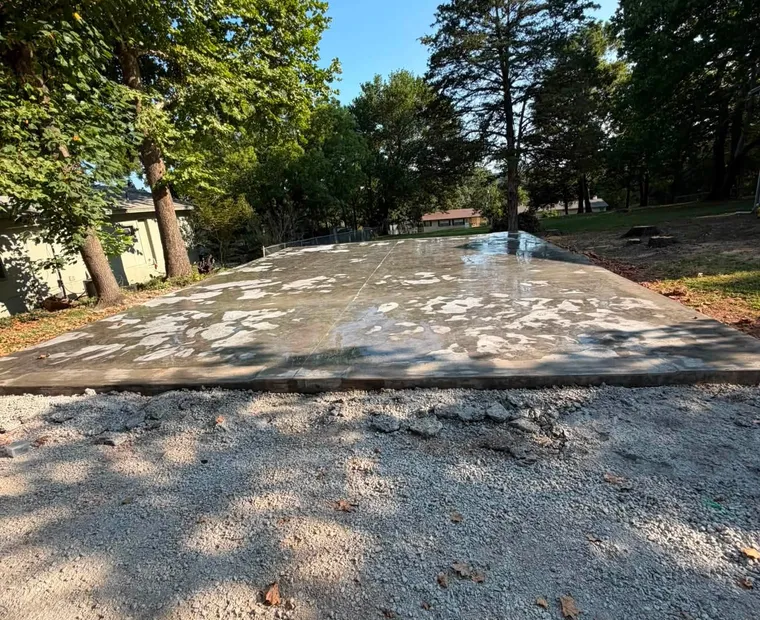
Slabs, footings and pads poured to spec, so whatever goes on top of them sits level and stays level.
- Trusted & Expert Roofing Team
- 100% Satisfaction Guaranteed
- Fast Response
- Licensed and Insured
- 3+ Years of Experience
- Free Estimates
- Finance Options Available
- Metal Roofing Specialists
Concrete Pad and Slab Services
A concrete pad is a reinforced slab poured on a prepared base, sized and thickened to suit whatever sits on it. Most slab problems come from the base and the drainage, not the concrete — which is exactly where a cheap price gets made. Sundown pours pads, slabs and aprons.
The base does the work
A slab is only as good as what sits under it, and that is the part a cheap price leaves out.
A slab is only as good as what it sits on. Properly compacted base material, at the right depth and correctly graded, is what stops a slab cracking and settling, and it is the part that gets skimped when a price looks too good.
On our ground, rock and clay both appear, sometimes in the same pour. Knowing which you have before you start changes the preparation.
Your estimate is Free
Tell us what you are building. We come out, look at the site, and put a proposal in front of you.
 Finance options(opens gethearth.com in a new tab)Spread the cost of a new roof, shop or barn over time.
Get started today
Tell us what you are building or what the roof is doing. We will get back to you to set up a site visit.
How it works
Your concrete pads in four steps
No mystery about what happens or when. This is the same sequence on every job we take.
Tell us what it carries
The heaviest load it will ever take is what the whole specification follows from.
Base and drainage planned
Where the water goes is designed with the pad, not worked out afterwards.
Prepared, formed, poured
Compacted base, reinforcement set, then poured, finished and jointed.
Told when you can use it
Foot traffic and vehicles are different dates, and we give you both.
Thickness, reinforcement and drainage
Specified from the load and the ground, not from a standard detail.
Thickness follows use
Thickness follows use. A pad for a garden shed and a pad taking a loaded truck are different pours with different reinforcement, and the only way to specify correctly is to know the heaviest load it will ever see.
Drainage decides the rest
Drainage decides the rest. Water sitting against or running under a slab is what causes movement over time, so grading and where the water goes are part of the job rather than an afterthought.
Rely on proven craftsmanship, every project
The same crew pours the slab, frames the barn and finishes the shop.
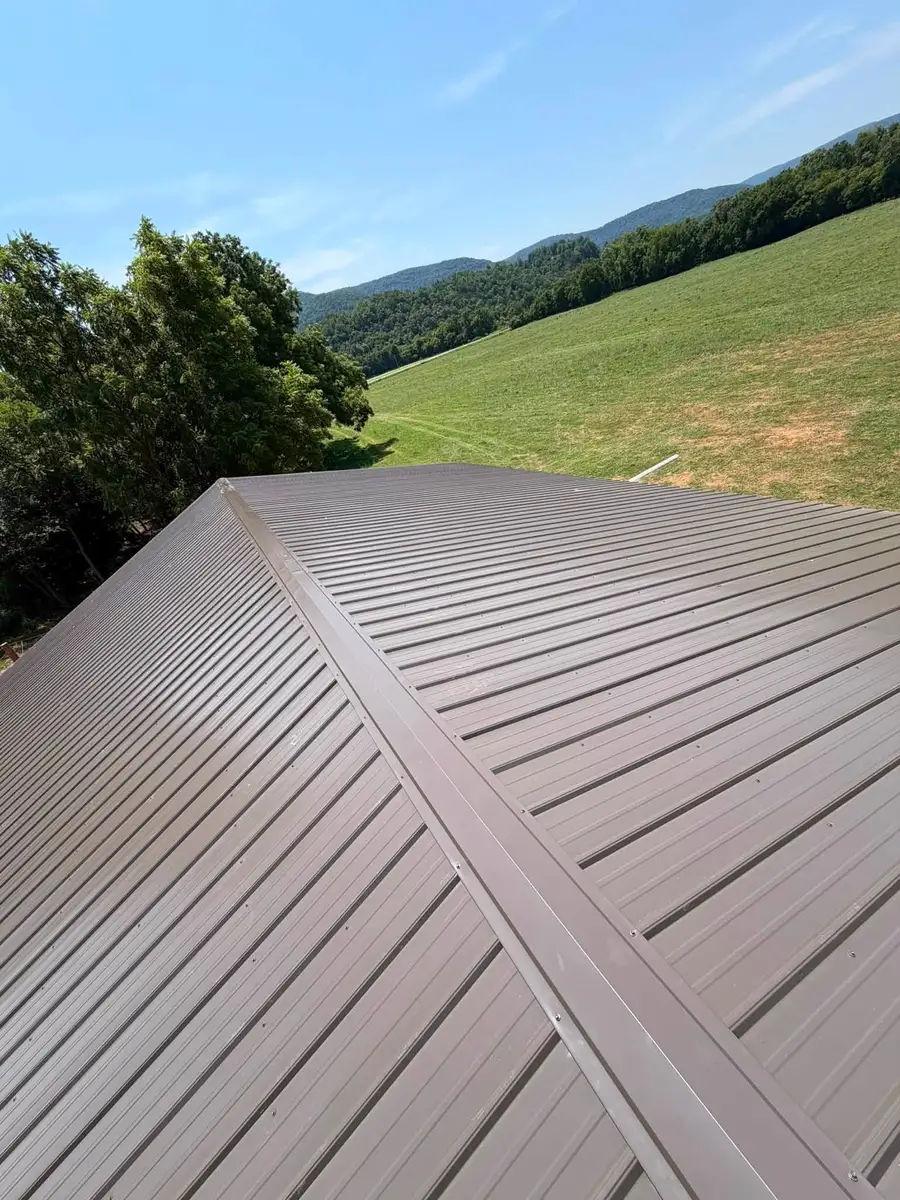
Metal Roof Installation
New standing seam and exposed-fastener metal roofing, specified for the weather this region actually gets.
Metal Roof Repairs
Leaks traced to the actual entry point and put right — fasteners, flashing, laps and storm damage.
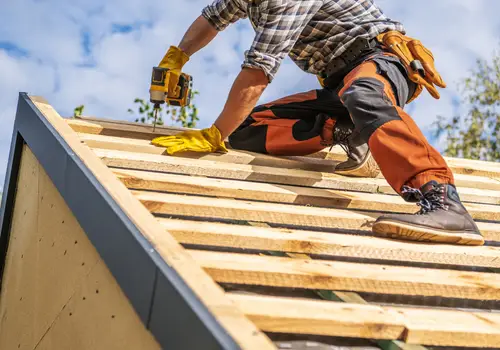
Metal Roof Replacement
Old covering off, deck made good, new metal roof on — with the condition underneath checked before anything goes back.
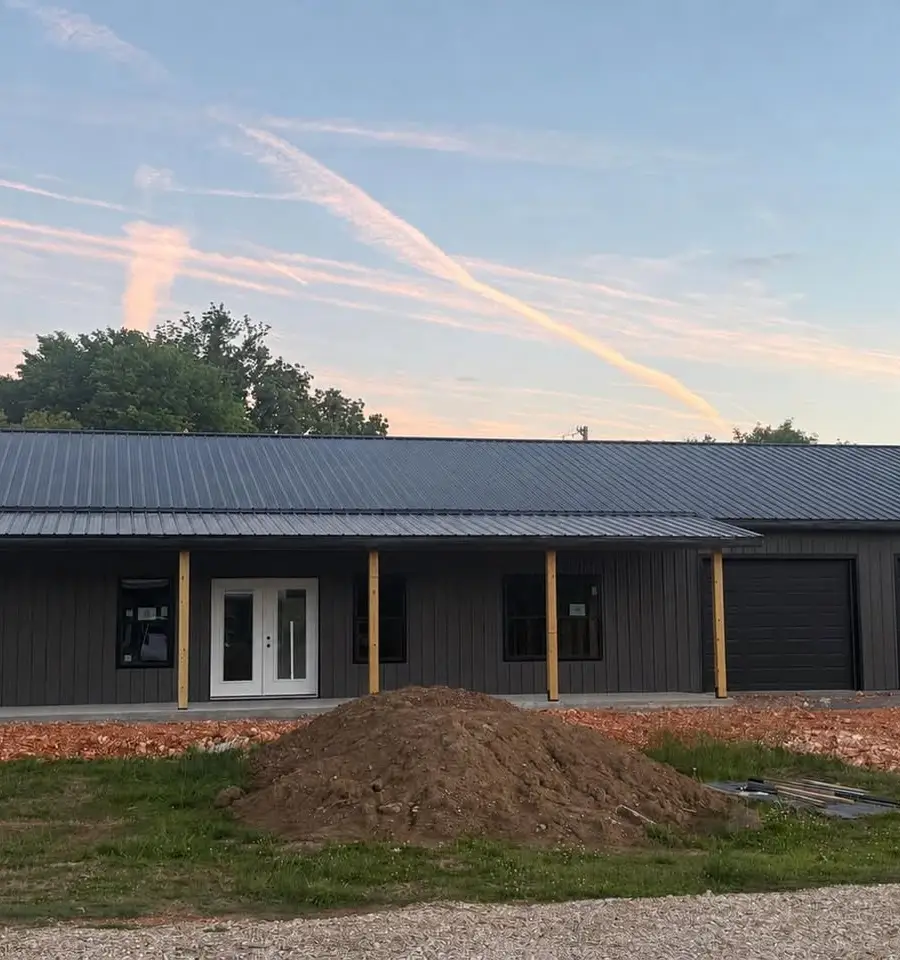
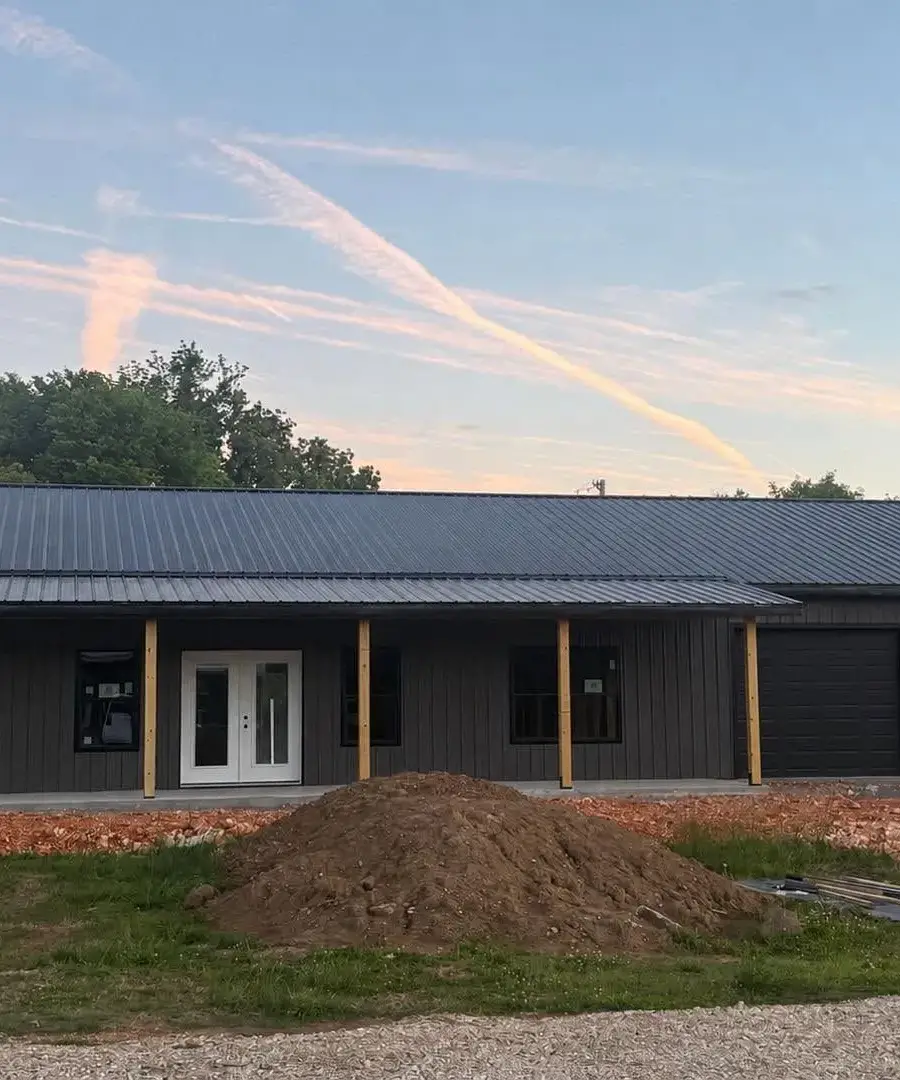
Custom Home Building
Ground-up homes taken from site work and foundation through to a finished, weather-tight build.
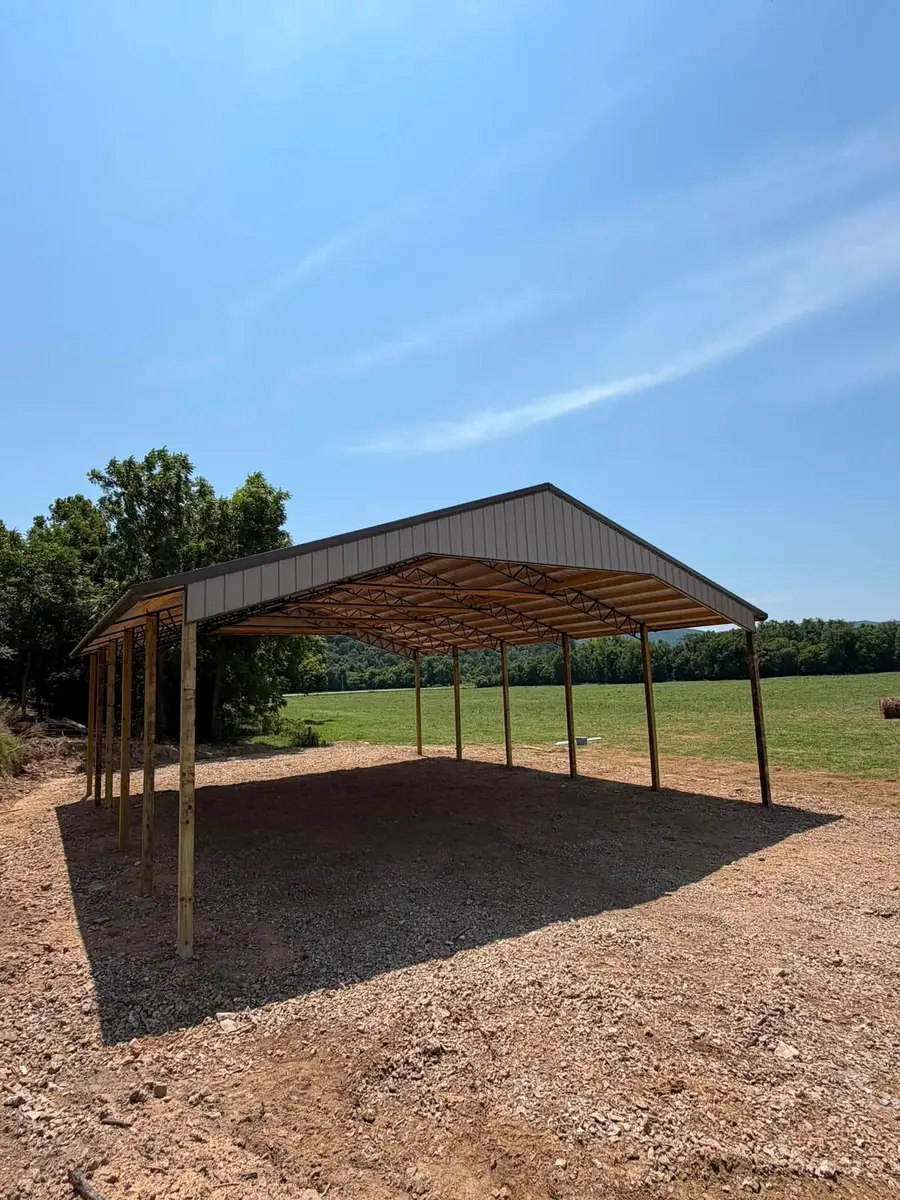
Pole Barn Construction
Post-frame barns, shops and outbuildings sized to the job — including turnkey site work and slab.
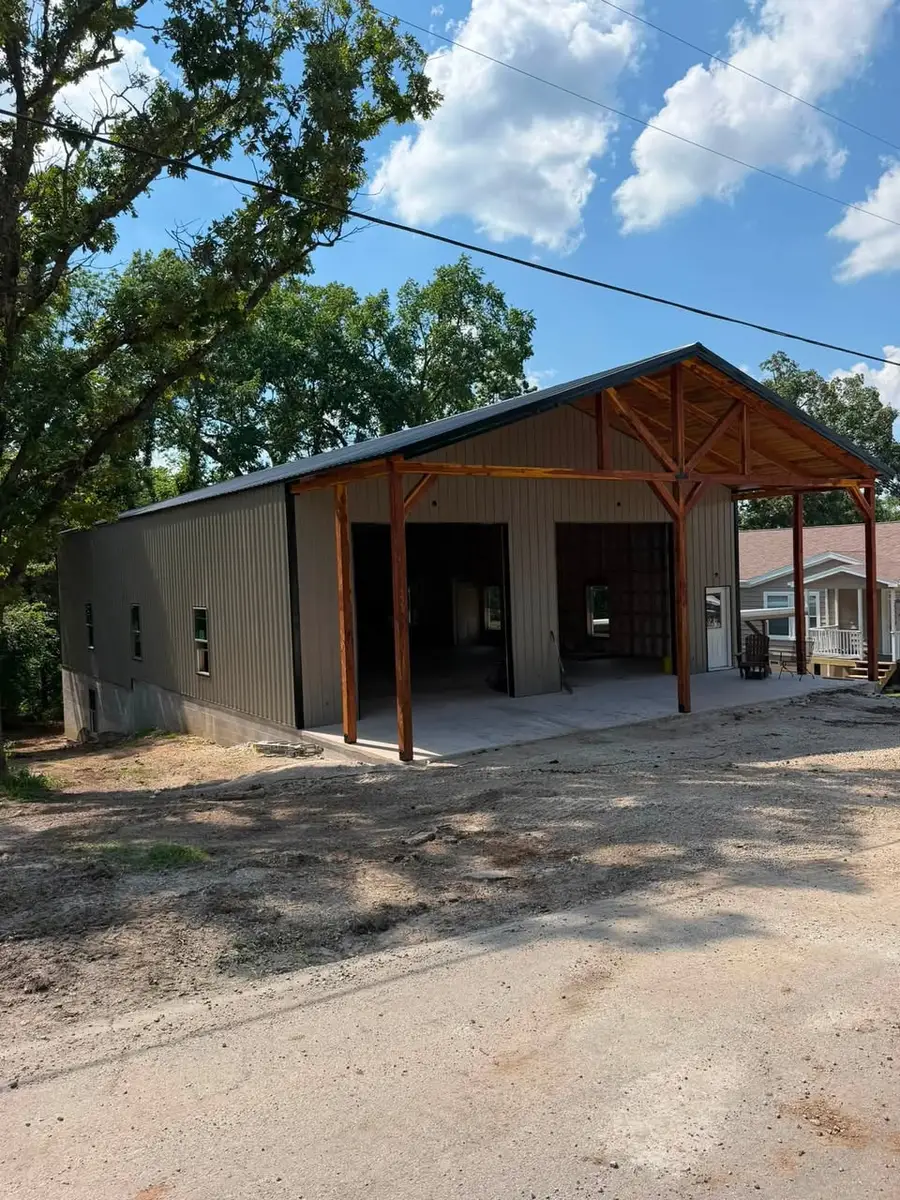
Shops & Garages
Workshops and garages built to be worked in — proper slab, proper doors, proper ventilation.
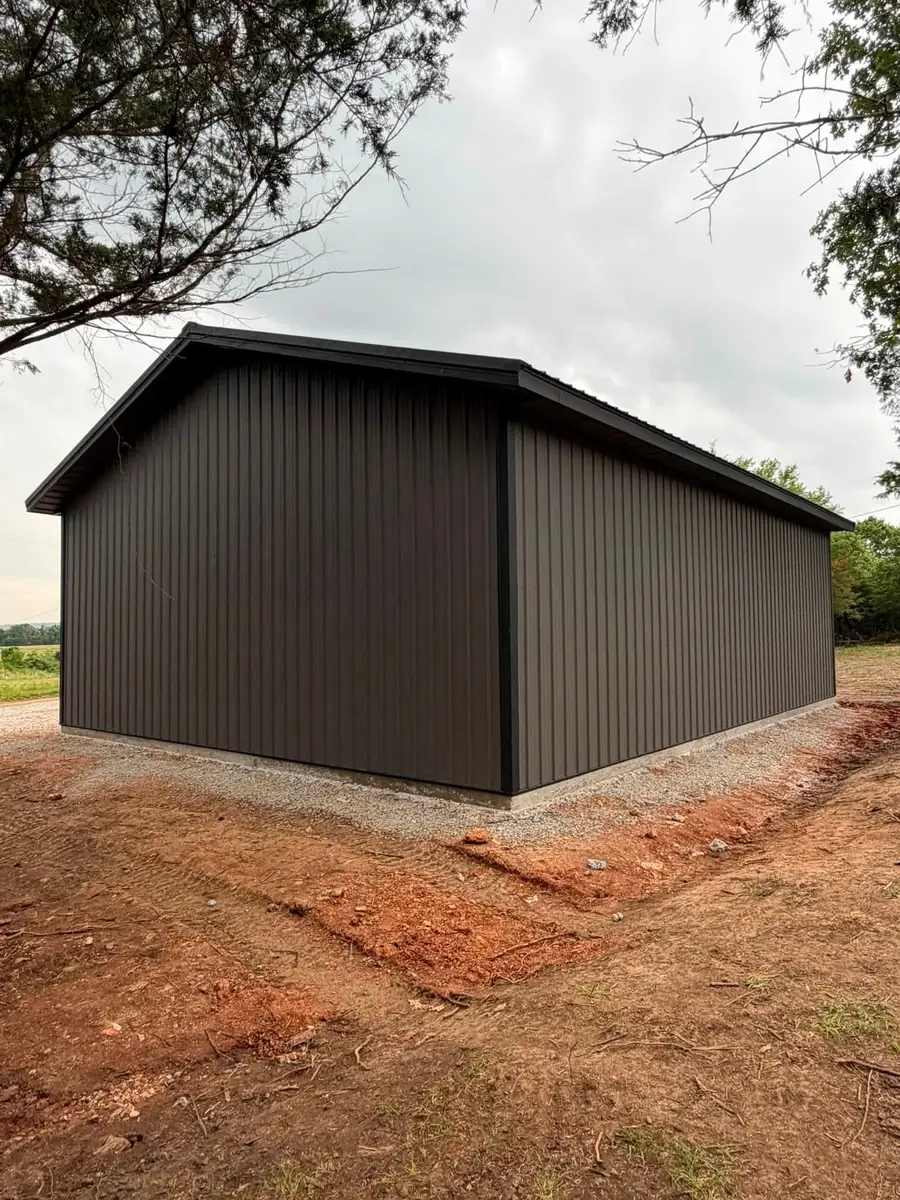
Siding
Siding fitted over a proper weather barrier, with the flashing at openings done right.
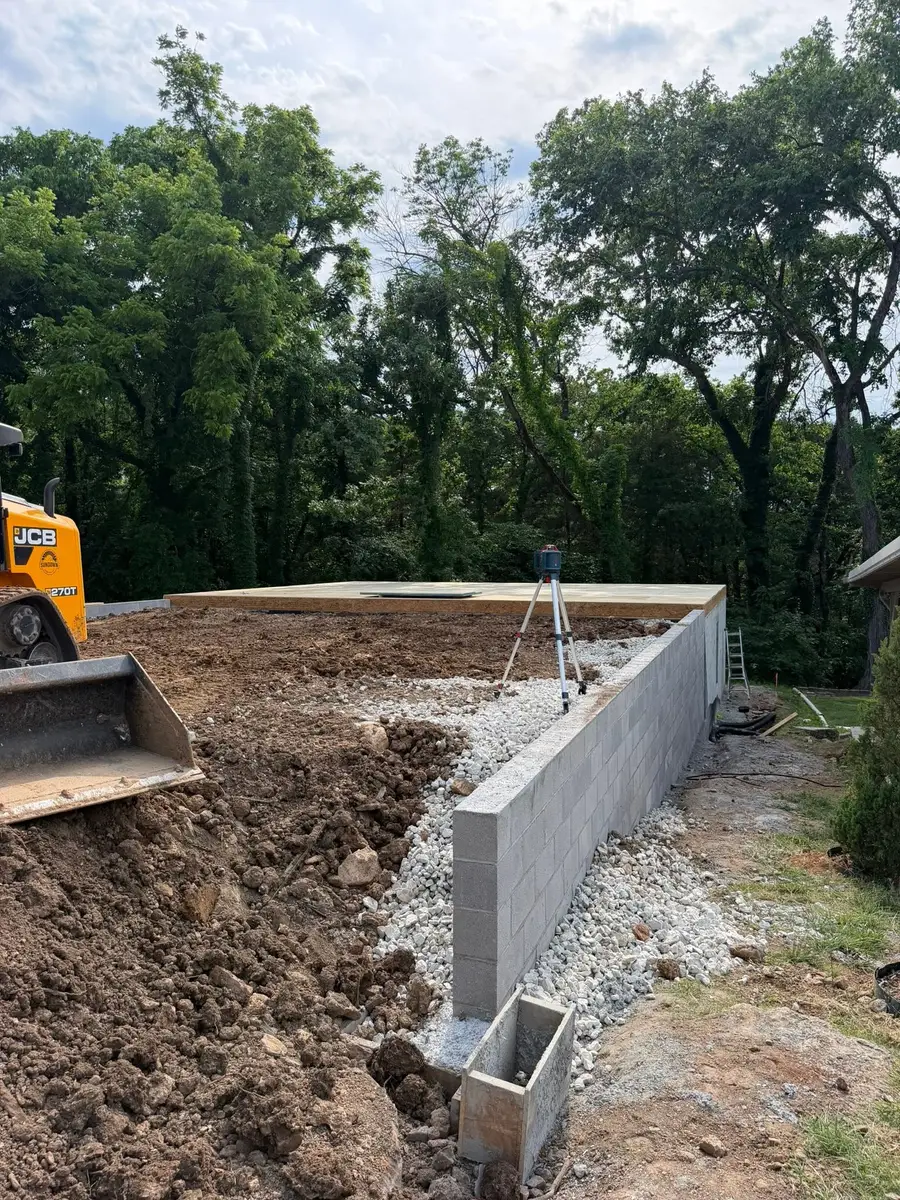
Foundations
Footings and foundations set into ground that has actually been assessed, with the drainage dealt with.
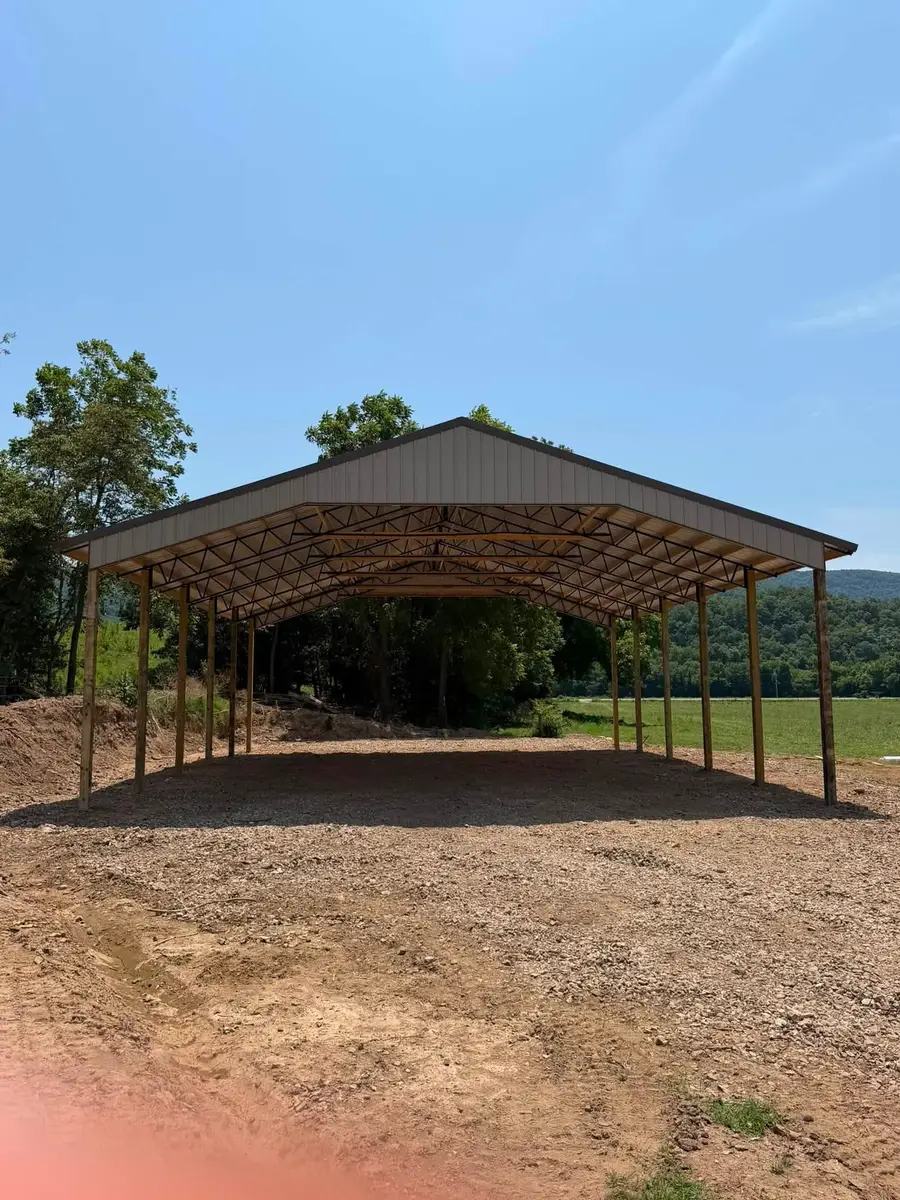
Car Ports
Covered parking built to stay put — because an open-sided roof has to be held down, not just covered over.
Concrete Pads across the region
Towns we cover across North Arkansas and Southwest Missouri.
- Boone CountyHarrison, AR
- Boone CountyBergman, AR
- Boone CountyBellefonte, AR
- Boone CountyValley Springs, AR
- Boone CountyAlpena, AR
- Boone CountyLead Hill, AR
- Boone CountyDiamond City, AR
- Boone CountyOmaha, AR
- Carroll CountyGreen Forest, AR
- Carroll CountyBerryville, AR
- Carroll CountyEureka Springs, AR
- Carroll CountyHoliday Island, AR
Dependable service rooted in craftsmanship
Reviews left by customers across North Arkansas — on roofs, shops, barns and slabs.
Concrete Pads questions
The things people ask us most often before booking this work.
How thick should a concrete pad be?
It follows the load. A domestic patio, a shop floor and a pad carrying heavy equipment all need different thicknesses and reinforcement. Tell us the heaviest thing that will ever sit on it and we will specify to that.
How long before I can use a new slab?
You can usually walk on it within a day or so, but it keeps gaining strength for weeks. We will tell you when it is ready for foot traffic and when it is ready for vehicles, and they are not the same date.
Why do concrete slabs crack?
Some fine cracking is normal as concrete cures. Cracking that matters comes from an inadequate base, poor drainage, missing reinforcement or control joints that were not cut where they should have been.
Do you do the site preparation as well?
Yes, and it is the part that decides whether the slab lasts. Base preparation and grading are included rather than being someone else’s responsibility.
Can you pour on a slope?
Yes. Sloping ground means cut-and-fill and retaining or stepping the pad, which adds cost, but it is routine on the ground around here.
Can I add a building to a pad later?
Only if the pad was designed for it. A slab poured as a patio will not generally carry a building, so if a structure is a possibility, say so before we pour — the extra cost then is small.
Do you pour driveways and aprons?
Yes. Doing them at the same time as a slab is meaningfully cheaper, because mobilising concrete once costs less than twice and you avoid a cold joint between the two.
What finish can I have?
Broom finish is the usual for exterior work and shop floors, since it gives grip when wet. Other finishes are available; we will go through what suits the use.
What time of year can concrete be poured?
Most of the year. Very cold and very hot weather both affect curing and need managing, and there are days we will recommend waiting rather than pour something that will not cure properly.
Do you pour foundations as well as pads?
Yes — footings and foundations for homes and buildings, as well as flatwork. See our foundations page for that side of it.